
In the world of linear motion technology, trapezoidal screws hold a central position for their durability, precision, and mechanical efficiency. Commonly referred to as lead screws, trapezoidal screws are extensively used in machinery that demands smooth linear movement, such as CNC equipment, lifting systems, industrial automation, and motion control devices. As industrial expectations for precision, speed, and sustainability continue to rise, trapezoidal screw production solutions have evolved to incorporate cutting-edge materials, automated machining processes, and smart manufacturing principles that ensure exceptional performance and reliability.
The Role of Trapezoidal Screws in Modern Industry
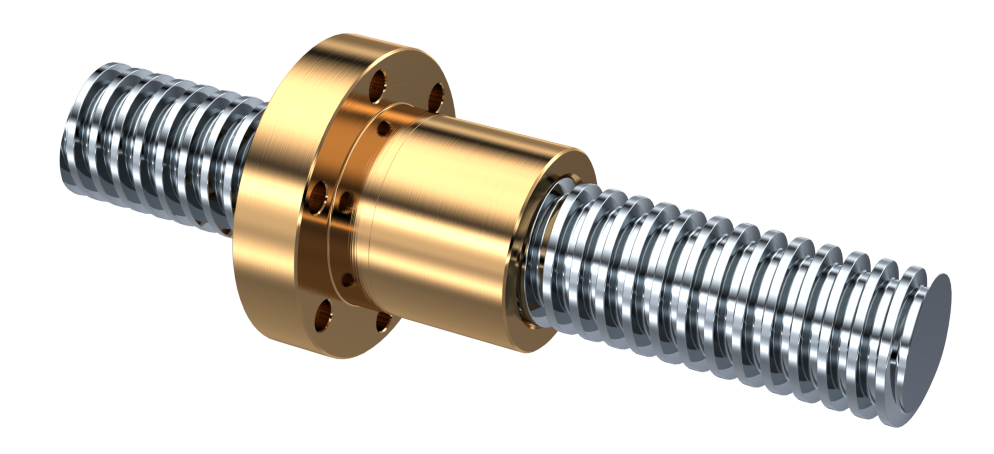
Trapezoidal screws are distinct for their trapezoid-shaped thread profile, typically featuring a 30° thread angle. This geometry balances the need for efficiency in converting rotational motion to linear motion while providing excellent load-carrying capacity and resistance to wear.
They are widely used in applications such as:
- Machine tools and CNC systems
- Vertical lifting and positioning equipment
- Packaging and filling machines
- Automated production lines
- Robotics and precision assembly systems
Unlike ball screws, which use rolling elements, trapezoidal screws rely on sliding motion between the screw and nut threads. This design makes them simpler, cost-effective, and self-locking — an essential safety feature in vertical or heavy-load applications where back-driving must be avoided.
Material Selection and Heat Treatment
The performance of a trapezoidal screw begins with the right choice of materials. High-quality carbon and alloy steels, stainless steels, and bronze are among the most common materials used. The selection depends on the intended application, load capacity, and environmental factors such as humidity, chemical exposure, or temperature extremes.
In high-performance systems, surface treatments like nitriding, induction hardening, and chrome plating are used to improve wear resistance and reduce friction. For applications requiring continuous operation under high stress, case-hardened alloy steels are preferred for their ability to resist deformation and maintain precise lead accuracy. Meanwhile, in hygienic or corrosive environments, stainless-steel trapezoidal screws provide reliable, rust-free operation — particularly in food, pharmaceutical, and medical machinery.
Advanced Machining and Precision Manufacturing
Modern trapezoidal screw production solutions heavily rely on advanced machining technologies to achieve accuracy in pitch, diameter, and surface finish. Traditional thread cutting methods have largely evolved toward CNC thread grinding, rolling, and milling, which enable precise and repeatable production while minimizing material waste.
CNC Thread Grinding and Rolling
CNC grinding provides superior accuracy and surface finish, essential for smooth motion and long-term performance. Thread rolling, on the other hand, enhances material strength by cold-forming the threads rather than cutting them, increasing the fatigue resistance and lifespan of the screw.
Five-Axis Machining and Integrated Tooling
Five-axis CNC machines allow for complex geometries, variable thread angles, and custom lead configurations — key to meeting specialized industrial design needs. Integrated tooling systems ensure that every screw produced maintains consistent dimensional accuracy within microns, making them suitable for high-precision motion control systems.
Automation and Quality Assurance
Automation lies at the heart of efficient and consistent trapezoidal screw production. Modern facilities deploy robot-assisted loading and unloading systems, computer-controlled inspection stations, and automatic lubrication processes to streamline production from start to finish.
Quality assurance is maintained through the integration of real-time measurement and inspection technologies, such as:
- Laser scanning and optical measuring systems
- Coordinate Measuring Machines (CMMs)
- In-process monitoring systems for thread pitch and lead accuracy
These systems ensure that each screw conforms to international standards such as ISO 2904 and DIN 103, guaranteeing compatibility and performance across various industrial applications. The use of non-contact inspection also accelerates throughput while maintaining stringent precision standards.
Embracing Industry 4.0: Digitalization and Data Intelligence
The move toward Industry 4.0 has significantly transformed trapezoidal screw production into a smart, connected manufacturing ecosystem. Real-time data from sensors and production lines provide insights for predictive maintenance, process optimization, and quality improvement.
Manufacturers now employ digital twins — virtual replicas of production lines — to simulate machining parameters, predict wear patterns, and refine tool paths before real production begins. This not only improves performance but also reduces material waste, energy consumption, and production downtime.
Sustainable and Innovative Production Practices
Sustainability has become a key factor in modern production strategies. Trapezoidal screw manufacturing is increasingly adopting energy-efficient machining equipment, recyclable materials, and waste reduction programs. Coolant filtration and recovery systems help reduce environmental impact, while dry machining methods are being explored for specific alloys and applications.
Moreover, additive manufacturing (3D printing) offers promising possibilities for prototyping custom lead screws or producing lightweight, optimized components for specific load requirements. These innovations are streamlining design cycles and enabling rapid customization.
Future Outlook
The future of trapezoidal screw production lies in combining smart automation, precision engineering, and sustainable manufacturing. As demand increases for more efficient motion control systems in robotics, electric vehicles, and renewable energy equipment, manufacturers will continue to refine production processes for higher precision and efficiency.
Continuous advancements in AI-driven process monitoring, adaptive machining, and digital integration will further enhance quality and consistency. The result is a new generation of trapezoidal screws — stronger, smoother, and more reliable — capable of driving the industrial world toward greater performance and sustainability.
Conclusion
Trapezoidal screw production solutions are an essential part of today’s high-precision manufacturing landscape. Through advanced materials, CNC technology, automation, and digital innovation, producers can deliver components that meet the toughest mechanical and operational challenges. As industries move toward smarter and greener practices, the evolution of trapezoidal screw production will remain key to achieving reliable, efficient, and sustainable motion technology for years to come.