
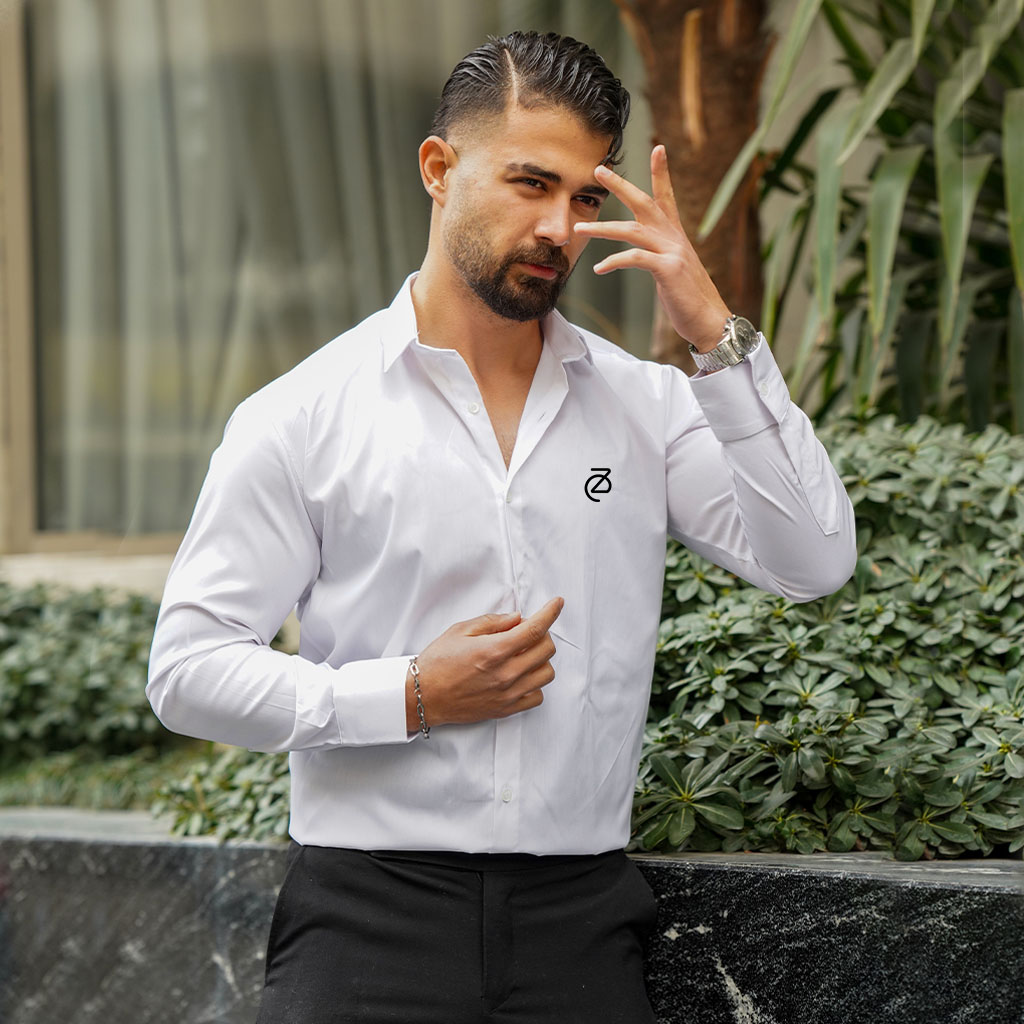
A truly stylish men’s shirt begins with its fabric. The material chosen dictates the shirt’s drape, feel, breathability, and overall appearance, fundamentally influencing how a man looks and feels. Understanding the differences between shirt fabrics is key to building a versatile and refined wardrobe. This comprehensive overview explores the best materials available, helping you select the perfect پیراهن مردانه شیک (stylish men’s shirt) for any occasion, ensuring both comfort and sartorial elegance.
Natural Fibers: The Foundation of Quality Shirts
Natural fibers are highly valued for their comfort, breathability, and durability. They form the backbone of high-quality shirting.
Cotton: The Versatile King
Cotton is, without a doubt, the most popular choice for men’s shirts. Its versatility, softness, and ease of care make it a perennial favorite. Different cotton weaves and types offer a variety of textures and qualities.
Broadcloth (Poplin): This is a densely woven, fine fabric with a smooth, crisp finish. It’s lightweight and relatively easy to iron, making it ideal for formal and business shirts. Its tight weave gives it a clean, sharp look. However, it can wrinkle easily.
Twill: Recognized by its distinctive diagonal weave pattern, twill is softer, thicker, and generally more lustrous than broadcloth. It drapes beautifully and is known for its durability and excellent resistance to wrinkling. Common twill variations include herringbone (a V-shaped pattern) and drill (a heavy, rugged twill).
Oxford Cloth: A basket weave gives Oxford its slightly heavier, textured, and durable feel. It’s a classic choice for casual and business-casual shirts. Pinpoint Oxford uses finer yarns and a tighter weave, offering a smoother, more refined version that bridges the gap between casual Oxford and formal broadcloth. It’s an excellent choice for a hard-wearing, yet elegant, everyday shirt.
End-on-End: This fabric uses two different colored threads (typically one white and one colored) woven together, creating a subtle, heathered effect from a distance, though it appears solid up close. It’s lightweight, soft, and offers a more textured look than poplin, perfect for an elevated business casual style.
Seersucker: Characterized by its puckered, crinkled texture, seersucker is a warm-weather staple. The weave allows the fabric to mostly hold away from the skin, promoting air circulation. It’s lightweight and, crucially, requires no ironing, making it superb for casual summer outings.
Chambray: Often mistaken for denim, chambray is a plain weave fabric, typically using a colored thread in the warp and a white thread in the weft. It’s much lighter and softer than denim, offering a casual, rugged look without sacrificing comfort or breathability.
Linen: The Summer Essential
Linen is spun from the fibers of the flax plant. It is highly valued for its exceptional breathability and coolness, making it the definitive choice for hot climates. Linen has a characteristic crisp texture and tends to wrinkle easily, which is part of its relaxed, natural charm. A quality linen پیراهن مردانه شیک embodies effortless summer sophistication, perfect for vacation or relaxed social settings. While a pure linen shirt is cool, a linen-cotton blend can offer a good compromise, retaining much of the coolness while reducing the tendency to crease.
Silk: The Ultimate Luxury
Silk shirts, though less common for daily wear, offer unparalleled smoothness, luxurious sheen, and excellent temperature regulation, keeping you cool in the summer and warm in the winter. They drape beautifully and are typically reserved for evening wear or special occasions where a bold, luxurious statement is desired. Silk requires delicate care and is significantly more expensive than cotton.
Synthetic and Blended Fabrics: Modern Innovation
While natural fibers dominate the high-end market, modern manufacturing has introduced quality synthetic and blended fabrics that offer specific performance benefits.
Polyester and Blends
Polyester is rarely used alone in quality dress shirts as it lacks breathability. However, when blended with cotton, it can significantly improve wrinkle resistance, durability, and moisture-wicking properties, often at a lower cost. These blends are popular for travel shirts or uniform wear where low maintenance is critical. The quality of the cotton-polyester blend often depends on the ratio, with higher cotton content offering better comfort and breathability.
Rayon (Viscose)
Rayon, also known as Viscose, is a semi-synthetic fiber derived from wood pulp. It has a soft, fluid drape and an appealing luster similar to silk. It is very absorbent and breathable but tends to wrinkle easily and can lose its shape when wet. Rayon is most often seen in fashion-forward, casual, or camp-collar shirts.
Selecting the Right Fabric for the Occasion
Choosing the right fabric is entirely dependent on the shirt’s intended use and the environment.
Formal and Business Wear: For a sleek, professional look, stick to fine Broadcloth or a smooth Pinpoint Oxford. Their clean finish works perfectly under a suit jacket. A subtle Twill also offers a great, slightly richer alternative.
Business Casual: Oxford Cloth, End-on-End, and lightweight Twill provide the ideal balance of structure and relaxed texture. They look smart with trousers or dark denim, often worn without a tie.
Casual and Summer Wear: Linen is king for hot weather. For general casual wear, Chambray and textured Oxford are durable, comfortable, and effortlessly stylish. Seersucker is an excellent seasonal option.
Performance and Travel: For men who travel frequently or require a shirt that looks impeccable all day with minimal effort, a high-quality, high-cotton Cotton/Polyester blend or a specialty “non-iron” pure cotton finish (achieved through chemical treatment) is the most practical choice.
Weave, Weight, and Finish: Details That Matter
Beyond the fiber type, the weave (like broadcloth or twill) fundamentally changes the fabric’s characteristics. Fabric weight is also crucial; a heavy-weight flannel shirt, for example, is perfect for warmth in winter, while a lightweight poplin is essential for summer.