
Selecting the right barcode scanner can have a significant impact on the efficiency and accuracy of your business operations. From managing inventory and processing transactions to tracking products across supply chains, the barcode scanner has become an indispensable tool for retailers, warehouses, healthcare providers, and logistics companies. However, with the variety of options available in the market, choosing the best device for your specific business needs can be challenging. Understanding the key features of barcode scanners will help you make an informed decision and maximize your investment.
Understanding the Role of a Barcode Scanner in Business
A barcode scanner is designed to read and interpret the information stored in barcodes, which are graphical representations of data commonly found on products, packages, and labels. The device captures barcode data and transmits it to a computer system or point-of-sale terminal, where it is processed for various functions such as sales transactions, inventory control, and product tracking.
The use of barcode scanners helps reduce human error, speed up data entry, and improve overall efficiency in business processes. As businesses scale and customer expectations grow, adopting the right scanning technology becomes even more critical.
Types of Barcode Scanners
Before diving into the features to consider, it’s important to know the types of barcode scanners available. Each type has its own advantages and is suited for different business applications.
Pen-Type Scanners
These scanners use a light source and photodiode at the tip of a pen-like device. The user drags the scanner across the barcode at a consistent speed to capture data. While affordable, they require precision and are less common in modern business environments.
Laser Scanners
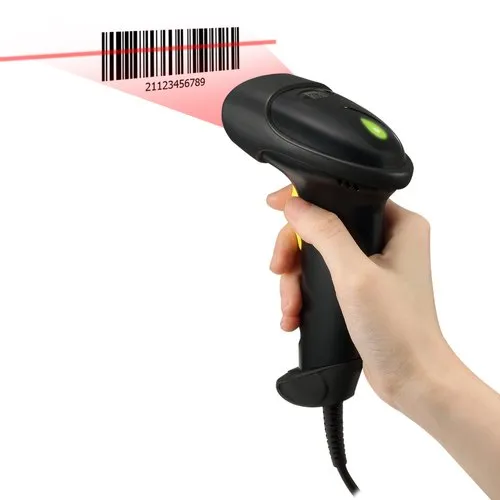
Laser scanners are widely used in retail and warehouses due to their accuracy and ability to read barcodes from greater distances. They project a laser beam across the barcode and interpret the reflected light pattern.
CCD (Charge-Coupled Device) Scanners
CCD scanners are highly reliable and often used in point-of-sale systems. They capture an image of the barcode and analyze it without relying on moving parts, making them durable and long-lasting.
2D Imagers
Unlike traditional 1D barcode scanners, 2D imagers can read both one-dimensional and two-dimensional barcodes such as QR codes. They capture an image of the barcode and decode it using sophisticated software, making them versatile for modern businesses that use multiple barcode formats.
Wireless and Mobile Scanners
Wireless barcode scanners provide flexibility by allowing staff to scan items away from fixed stations. They are ideal for large warehouses, healthcare environments, and logistics companies where mobility is essential. Mobile barcode scanning apps, often run on smartphones or tablets, are also becoming increasingly popular due to their cost-effectiveness and adaptability.
Key Features to Consider When Choosing a Barcode Scanner
With a clear understanding of the types, businesses should evaluate specific features to ensure they select the most appropriate barcode scanner.
Compatibility with Business Systems
One of the first considerations is whether the barcode scanner integrates seamlessly with your existing systems, such as point-of-sale software, warehouse management systems, or ERP platforms. Ensuring compatibility avoids additional costs for customization and reduces workflow disruptions.
Scanning Distance and Speed
The working range of a barcode scanner is crucial. For example, retail cashiers need short-range scanners for products at the counter, while warehouse workers may require long-range scanners capable of reading barcodes from several feet away. Scanning speed is equally important in high-volume environments where efficiency is a priority.
Barcode Type Support
Not all barcode scanners can read every type of barcode. If your business uses both 1D and 2D codes, you’ll need a scanner that supports multiple formats. For industries like healthcare or manufacturing, where specialized barcodes are common, choosing a device with broad compatibility is essential.
Connectivity Options
Barcode scanners come with different connectivity methods such as USB, Bluetooth, or Wi-Fi. Wired connections are reliable and suitable for stationary use, while wireless options provide flexibility and mobility. Choosing the right connectivity option depends on whether your staff needs to move freely or work in fixed positions.
Durability and Environment Suitability
The physical environment plays a key role in scanner selection. Retail scanners may only require moderate durability, while warehouse or industrial environments demand rugged devices that can withstand dust, moisture, and accidental drops. Look for scanners with IP ratings that specify their resistance to harsh conditions.
Ergonomics and Ease of Use
User comfort should not be overlooked, especially if the scanner will be used for extended periods. Lightweight, ergonomically designed scanners reduce strain and improve productivity. Features like hands-free operation, adjustable stands, and intuitive button placement also enhance ease of use.
Battery Life for Wireless Scanners
For wireless barcode scanners, battery performance is critical. Devices with long-lasting batteries ensure uninterrupted operation throughout the workday. Some scanners also come with quick-charging features or hot-swappable batteries for continuous use.
Security Features
In sectors such as healthcare and finance, data security is a top priority. Some barcode scanners include encryption protocols to ensure sensitive information is transmitted securely. Businesses handling confidential data should prioritize scanners with strong security features.
Cost and Total Value
Price is always a factor, but businesses should evaluate total value rather than focusing solely on upfront cost. Investing in a durable, high-performance barcode scanner can lead to long-term savings by reducing downtime, minimizing errors, and avoiding frequent replacements.
Benefits of Choosing the Right Barcode Scanner
Selecting the right scanner delivers multiple benefits that go beyond simple data capture.
Improved Operational Efficiency
Barcode scanners streamline workflows by speeding up transactions, reducing manual entry, and minimizing mistakes. This results in faster checkouts, quicker inventory counts, and more accurate order fulfillment.
Enhanced Customer Experience
In retail environments, efficient barcode scanning leads to faster service, shorter queues, and improved customer satisfaction. In healthcare, it ensures patients receive accurate medication and treatments.
Better Inventory Management
Barcode scanners provide real-time visibility into inventory levels, helping businesses track stock movement, reduce overstocking, and prevent stockouts. This leads to more accurate demand forecasting and better decision-making.
Scalability and Adaptability
As businesses expand, having the right barcode scanner ensures scalability. Advanced scanners with multi-format support can adapt to evolving business needs, new products, and changing barcode standards.
Cost Savings
By reducing errors and improving productivity, barcode scanners help businesses save on labor costs, minimize waste, and optimize overall operations.
Choosing the Right Barcode Scanner for Your Industry
The best barcode scanner for your business depends largely on your industry. Retailers often prefer fast, reliable handheld or fixed-mount scanners for checkout counters. Warehouses and logistics providers benefit from rugged, long-range scanners with wireless connectivity. Healthcare providers require scanners with high precision and strong security features to ensure patient safety. Manufacturing companies may need industrial-grade scanners that can withstand harsh conditions while delivering consistent performance.
Final Thoughts
A barcode scanner is more than just a data capture tool—it’s an essential part of modern business operations. The right scanner enhances efficiency, accuracy, and customer satisfaction while reducing costs and errors. By carefully evaluating features such as compatibility, durability, connectivity, and barcode format support, businesses can choose a device that aligns with their operational needs and long-term goals. Investing in the right barcode scanner ensures your business stays competitive in an increasingly data-driven world.